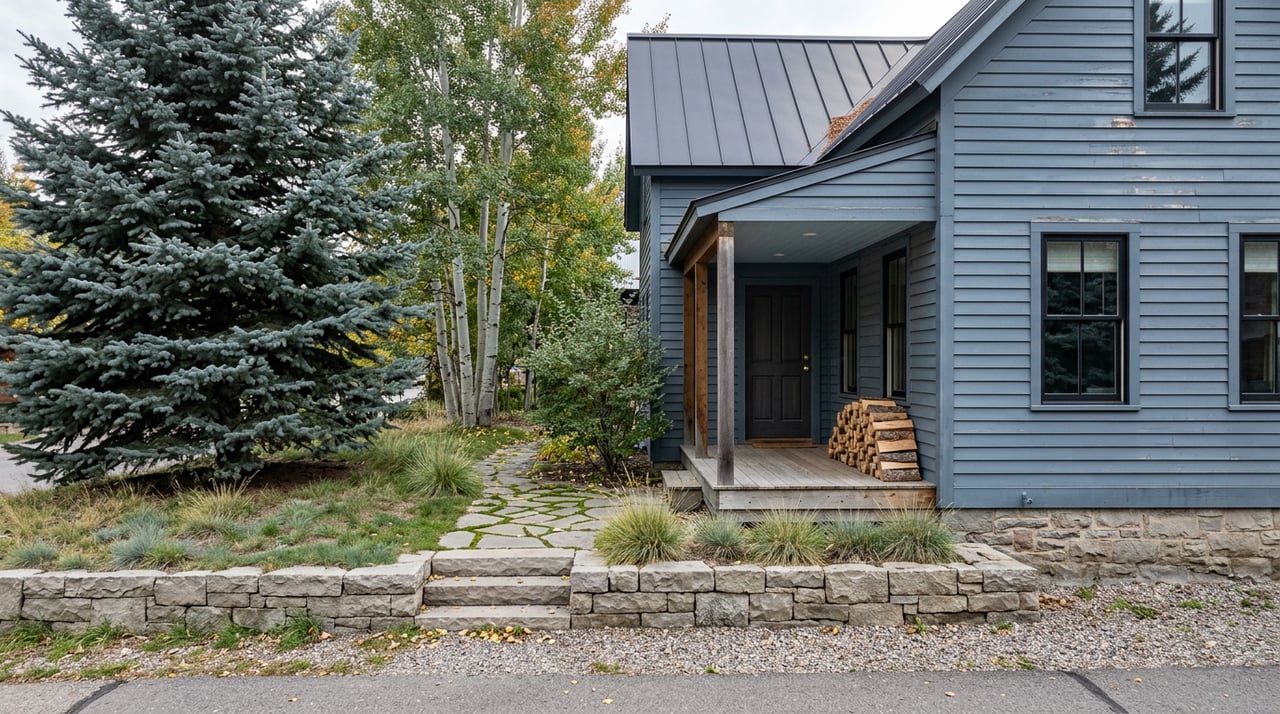
Main Street is quiet this week in a specific way. The film crowds who packed the sidewalks for the 53rd Telluride Film Festival over Labor Day weekend have gone home, and the next wave, in for the Telluride Blues & Brews Festival, hasn't arrived yet. That gap, roughly ten days, is when this town actually shows you what it's like to live here rather than visit here. And this year, one thing missing from that picture is the sound that usually fills it every August afternoon: knobby tires and full-suspension frames dropping off Lift 4.
They never showed up. For the first time since it opened in 2019, the Telluride Bike Park sat closed for an entire season, and the reason wasn't snow or fire or a bad economy. It was a lift.
The closure nobody could argue their way around
In late March, Telluride Ski & Golf announced that Lift 4, the chair that feeds the park's downhill, technical, and freeride trails, needed an operational modernization that construction crews couldn't safely work around while bikers were riding beneath them. The resort said as much on its own site: heavy equipment would be on that hillside seven days a week through spring and summer, and there was no version of lift-served or alternative access that penciled out. So the whole park went dark for the year, roughly 20 miles of trail that had defined Telluride summers, gone quiet at once.
The timing made it sting more. This closure landed on the back of the longest professional ski patrol strike in U.S. history, a 13-day shutdown that closed the entire mountain over the December holidays before patrollers and resort ownership settled on a deal that fell short of what the union had asked for. By the time bike season should have started, this had already been a hard year for the people who work the mountain for a living, and the park closure meant a second summer income stream went with it. Local estimates put the number at 30 to 40 full-time bike park employees affected, with a similar number of part-timers, in a town where those job counts are not abstractions. They're people you know at the coffee shop.
What stayed open, and why it mattered more than expected
Here's the detail that changes the shape of this story: Telski didn't close the mountain. It closed the lift-served, gravity-fed side of the mountain. The cross-country network, the pedal-up trails through Prospect Basin and around Mountain Village, stayed open all season, free of charge, accessible from the San Sophia gondola station at the midpoint of the tram line.
That distinction turned out to matter more than a consolation prize usually does. Riders who wanted mileage still had it. The Jurassic Trail, a 1.7-mile out-and-back through the Peaks toward Big Billie's and the Meadows, kept running all year. So did the longer combination rides, like the roughly 15-mile loop that strings together Prospect Trail, Jurassic, and the Upper Valley Floor into a climb-heavy circuit that starts and ends at the gondola. None of that required a lift ticket. None of it required Lift 4 at all.
What it did require was a different kind of riding. Downhill laps are measured in runs per hour. Cross-country loops are measured in vertical feet earned the hard way. Locals who spent a normal August lapping Tommyknocker or No-Brainer in the park spent this August pedaling up instead of loading a chair, and the town's rental fleets adjusted with them. Shops that carry gravel bikes alongside full-suspension rigs didn't have to pivot on inventory so much as on which bikes came off the rack first.
The shop that didn't lose what you'd think
Steven Steinberg, who owns Telluride Cyclery, gave the most useful number to come out of this whole story when he talked to the local paper about the closure's actual reach. Only around 10 percent of his rental customers, he estimated, were renting specifically for the bike park. That's a smaller slice than the closure headlines might suggest, and it tells you something true about how this town rides: most people here aren't chasing lift-served laps, they're riding to get somewhere or riding because it's Tuesday and the trail is right there.
But Steinberg didn't stop at the reassuring number. He pointed to the wider effect on locals who depend on the park for recreation, for work, and in some cases for meeting the working-hours requirements tied to deed-restricted housing in the region, the kind of local detail that only someone renting bikes across a full season would think to flag. And on the mountain itself, David Wernet, the bike park's trail crew manager since 2021 and one of the builders behind its current layout, was told before winter even ended that there would be no trail work for him this year, no matter what happened with the lift timeline. He's building trails in Arkansas now instead.
Those two facts sitting next to each other, a shop owner whose bottom line barely moved and a trail builder who left the state, are the real measure of what this closure did. It didn't break the town's relationship with biking. It rerouted who felt the loss and how.
The week the town gets quiet, then loud again
Which brings us back to this particular stretch of September. The gondola is still running its normal free service between Telluride and Mountain Village, seven days a week until midnight, through October 25, so anyone chasing that cross-country network still has several weeks of easy access left. Aspens around town typically start turning in mid-September and peak in late September into early October, and this year that clock is running early. A dry spring and summer pushed the color change ahead of its usual schedule, which means the gold is likely to show up on schedule with the next round of festival traffic rather than after it, for once.
That traffic arrives September 18 through 20, when the Telluride Blues & Brews Festival returns to Town Park for its 32nd year. This year's lineup is led by Jon Batiste, Taj Mahal and Keb' Mo', and the Marcus King Band, backed by a Grand Tasting from more than 50 craft breweries. It's the kind of weekend that fills every parking spot on Colorado Avenue and reminds you the town triples in size when it wants to. Then the crowds thin again until the Telluride Autumn Classic, a four-day car show built around Corvettes and fall color, rolls through September 24 to 27, followed by Original Thinkers, the town's ideas festival, October 1 through 4.
Somewhere in that stretch, the Michael D. Palm Theatre is still working through recovery from the flash flood that hit the building in July, damage that required real coordination to get the space ready in time for Film Festival screenings in September. Palm Arts' executive director described herself as cautiously optimistic about the timeline, which is about as close to a definitive answer as anyone in this town gives you about anything construction-related this year.
What outlasts the lift
The open question locals are still sitting with isn't really about biking. It's about whether Lift 4 will actually be finished for the 2027 season, or whether this year's uncertainty repeats itself. Telski has said the lift modernization itself is complete, with details on the operational side still being finalized as of midsummer. Nobody in town is treating that as a guarantee.
What seems more durable than the lift timeline is the riding habit this closure created. A season built around free, gondola-accessed cross-country loops instead of paid lift laps isn't a downgrade so much as a different relationship with the mountain, one where the trail you ride depends on how much climbing you're willing to do rather than which lift ticket you bought. If Lift 4 comes back exactly on schedule next summer, it's a fair bet some of these riders keep pedaling up anyway. The habit outlasted the reason for it.
If you're weighing what it actually feels like to live somewhere before you commit to it, this is the kind of texture that doesn't show up in a listing description. Ouray Real Estate Corporation spends its time in these towns for exactly this reason. Let us guide you to your home in Colorado.
This article is general information, not legal, tax or financial advice. Consult a qualified professional about your situation.